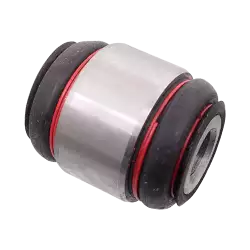
Steering knuckles and related components
Steering Knuckles & Related Components | What They Do & When to Replace
The steering knuckle (also called an upright or hub carrier) is a core part of the front
suspension and steering system. It connects the wheel hub/bearing to suspension arms and the steering linkage, allowing the
wheel to turn left and right while supporting vehicle load. Because knuckles and their related parts are highly vehicle-specific
(ABS type, bearing size, brake setup, drive configuration), always confirm fitment details before ordering.
Key parts related to the steering knuckle
- Wheel hub & wheel bearing: Mounted to/within the knuckle and allows smooth wheel rotation. Many modern designs use a sealed hub-bearing unit.
- Ball joint (lower / sometimes upper): Connects the control arm to the knuckle and allows suspension movement while steering.
- Track rod end (tie rod end): Attaches to the knuckle to turn the wheel; also affects toe alignment.
- Strut/clamp or upper arm mount: The knuckle bolts to the strut (MacPherson) or upper/lower arms (double wishbone setup).
- Brake caliper carrier (bracket): Often bolts to the knuckle and holds the caliper in the correct position.
- ABS sensor / tone ring: The knuckle area houses the sensor or the bearing/hub contains the tone ring for ABS/traction control.
- CV joint / driveshaft interface (FWD/AWD): The hub within the knuckle connects to the driveshaft via a splined CV joint.
- Dust shields & fasteners: Protect brakes and help keep dirt/water away from critical areas.
When should steering knuckles or related parts be replaced?
Steering knuckles themselves don’t “wear out” like pads or bushes, but they can become damaged from impact, corrosion, or
failed bearings/joints. Related components (bearings, hubs, ball joints, tie rod ends) wear gradually depending on road conditions.
Many start to show wear anywhere from 40,000–100,000 miles, but symptoms and inspection should guide replacement.
- After a kerb/pothole impact: Bent knuckle, damaged hub, or shifted geometry can cause pulling, vibration, or uneven tyre wear.
- Persistent alignment issues: If alignment won’t hold or the vehicle keeps pulling, check for a bent knuckle, worn ball joint, or tie rod end.
- Wheel bearing noise: Humming/growling that increases with speed or changes when cornering may indicate a worn bearing/hub assembly.
- Play in the wheel: Movement when rocking the wheel at 12/6 or 3/9 can suggest bearing, ball joint, or tie rod wear.
- Clunking/knocking: Often from worn ball joints, loose caliper carriers, or damaged mounting points.
- Uneven tyre wear: Especially inner/outer edge wear can point to worn joints or incorrect toe/camber from damaged components.
- ABS/traction warnings: Can occur if the ABS sensor, wiring, or tone ring/bearing is damaged or contaminated.
- Severe corrosion: Rust around mounting points, sensor seats, or bearing locations can compromise fit and safety.
Best practice (safety + handling)
- Whenever steering/suspension parts are replaced, book a professional wheel alignment.
- If replacing a hub/bearing, always check the ABS sensor/tone ring compatibility for your vehicle.
- Replace worn joints in pairs where appropriate (left/right) to keep steering feel consistent.
- Use correct torque settings and new stretch bolts where specified—knuckle assemblies are safety-critical.
Tip: If your vehicle has suffered an impact and the steering feels “off” afterwards, don’t ignore it—knuckle-related
damage can quickly lead to rapid tyre wear and unstable handling.